On the bus ride home tonight, it occurred to me that a better way of approaching the Seven Cities setting would be to come at it from the perspective of play than concept. I.e., instead of starting with the magic system, I would do better to start with the major geopolitical conflicts informing the setting, conflicts that would make for interesting sessions.
Here's what came to mind as a result of this insight:
1. Led by seven powerful sorcerers, the ancestors of the Seven Cities citizens arrive at the mouth of a great river basin. They are fleeing some great conflict or evil in their ancient eastern homeland. (Yes, Kevin Crawford's Red Tide is my inspiration here.)
2. As the Seven Cities folk spread out across the basin, founding new cities, they come into conflict with the aboriginal clans. The locals are no match for advanced sorcery and are eventually conquered. They become the ancestors of the laborers who grow the cities' food, mine their ore, chop down their wood, and clean their homes. Periodically there are workers' revolts and uprisings.
3. The most savage of the aboriginals refuse to be conquered and flee into the mountains north of the basin. Their descendants are the barbarian tribes that periodically harass the northern cities before being driven back into the hills and mountains.
4. There also aboriginal tribes dwelling in the great southern desert that sits between the river basin and the territory of the expansionist Azure Empire. The sorcerers never bothered to conquer these tribes, having no interest in their harsh desert lands. As a result, the tribes continue to raid the southern cities and attack caravans moving north and south through the desert.
5. The Azure Empire would very much like to conquer the Seven Cities and take their magic lore for its own. Imperial sorcerers aren't a match for the Seven Cities wizards, though, and the Azure Empire has opted instead to achieve its goals through destabilization, infiltration, and treason.
6. One of the Seven Cities is "the good guy." Its citizens treat their workers well, try to maintain peace with the local barbarians, and work to unify the region against the Empire. Needless to say, they're the primary target of rabble-rousers and enemy agents.
7. One of the Seven Cities is "the bad guy." Its citizens are not just interested in political power in the region, but are actively messing with forces best left alone. This is the nasty, decadent piece of work in the setting.
8. The remaining five cities are in a state of political flux, constantly forming and breaking alliances in attempts to dominate the river basin.
This history gives me a number of story elements:
1. What caused the citizens to flee their ancestral homeland? At the campaign's start, this will be a mystery. It may stay that way unless players are particularly interested in revisiting it.
2. The conquered locals are a source of unrest that players will inevitably find sympathetic.
3. The northern barbarians and the southern barbarians are not only points of origin for the most archetypal of S&S characters, but are also adventure generators in their own right. Maybe they're uniting to make a major push for revenge (and are seeking common cause with their "cowardly" cousins in the lowlands), threatening the caravan trade, etc.
4. The Azure Empire is always there, lurking in the background.
5. The good city provides players who want to be the good guys with a patrons. Players who like to live on the shady side of the law might opt to help conquer it instead.
6. The bad city is the mad dog that needs putting down--it's the Joker, and it just wants to see the world burn. Maybe it's gotten in touch with demons or maybe it's reestablished connection with whatever forced the ancestors to flee in the first place.
7. The petty intrigues of the remaining five cities are a source of constant story hooks, big and little.
With this framework in place, I can start to figure out the game-related stats for each culture involved in the setting (smallfolk, northern barbarians, southern barbarians, Azures, city-dwellers with an option to further subdivide into seven urban cultures). I can also decide what magic traditions to associate with each city. Two things that immediately come to mind: Drimshy maintains its focus on wind and water magics--it's the oldest of the Seven Cities, sitting atop the landing site of the refugee fleet. I also think that I need to avoid the clichéd approach of making the necromancers of Achiroth the crazy bad guys; they're either one of the "neutral" five or (if I was feeling particularly cheeky) the good guys.
Thoughts?
Tuesday, July 12, 2011

Monday, June 20, 2011
Work of Giants Now Online
I've set up a wiki for the Stars Without Number campaign that I'm developing; it's called Work of Giants. I'll probably post material under development here first and then shift it to the wiki when it's in final form. So just a heads-up!
Wednesday, June 15, 2011
Barbarians in Spaaaaaace!
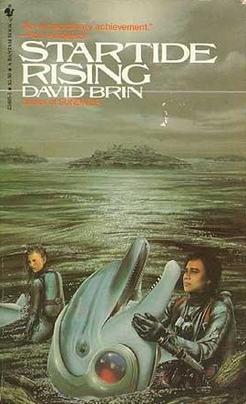
I'll have more to say about SWN in a later post, but I wanted to concentrate for now on the thematic link between sword-and-sorcery fiction and science fiction: the connection that lets me justify talking about an SF RPG on a barbarian-themed blog. (Well, in addition to the fact that I can talk about whatever I want on my blog.)
While rereading David Brin's Startide Rising as part of an SF inspiration binge, I realized that Brin's central metaphor of Uplift is both a knowing critique of imperialism within SF (Earthclan emerges into interstellar space not as masters of all they survey but as primitives confronted by imperial authority) and an entry in SF's ongoing infatuation with the cyclical historiographies of Oswald Spengler and Arnold J. Toynbee. The Old Weird writers so central to twentieth-century pulp fantasy—Robert E. Howard, H. P. Lovecraft, and Clark Ashton Smith—were operating at the same time as Doc Smith and the early SF pulp writers—and clearly the fantasists were drinking the same Spenglerian Kool-Aid as the scientifictionists. (Toynbee's 1950s provenance puts him after the original Old Weird moment.)
This is not a stunning, hitherto-unanticipated insight, but it is a useful one for me: the same tropes that inform barbaric fantasy inform imperial SF. Howard's Cimmerians are Brin's Earthlings (human, neo-chimp, and neo-dolphin alike). The SF characters fly their ships through the same ruined, belated landscape as their sword-slinging cousins, and the mandarinates of Brin's Galactic Institutions are perfectly akin to the decadent Hyborian civilizations of Conan's day.
All this is a fancy way of saying that running SWN—a game indebted in equal parts to the S&S-drenched rules sets of early D&D and the imperial SF of Traveller—fits in perfectly with the primary focus of this blog!
Wednesday, May 25, 2011
The Seven Cities of Magic, Take Two
I've made a few changes since my last post on the Seven Cities, both in response to the comments I received and as a result of further personal reflection. At the macro level, I've decided to concentrate on the Seven Cities and their immediate neighborhood instead of outlining a larger, more global setting. Working on a smaller scale is conducive to actually playing sooner rather than later. To this end I'm thinking that a mountain range populated by barbarian tribes and foul beasts lies to the north of the Seven Cities while a vast desert separating the Cities from the Azure Empire lies to their south. This desert also contains savage tribes and hideous beasts, but well-guarded caravans can successfully cross it.
I'm pondering the wisdom of including a large forest populated by the devolved remnants of the precursor civilization to the current human population. One thought would be to go with the savage elf archetype (a kind of inverse Melnibonean). But I could be persuaded to go in a different direction here. One thing is for certain: I don't want to use any sort of Serpent Men. That archetype feels played out to me.
As for the Seven Cities themselves, six are now dedicated to a particular magical tradition while the seventh is a sort of treaty city dedicated to sorcerous education:
1. Achiroth - A thanatocracy devoted to necromancy and shadow magics.
2. Banashan - Home to the university.
3. Belrood - A gynocracy ruled by witches and alchemists.
4. Drimshy - A maritime republic specializing in water and wind magics.
5. Kherem-Kha - A theocracy dependent on summoned outsiders.
6. Meton - A landlocked republic specializing in earth and fire magics.
7. Viserne - A city of illusions and glamours.
Thoughts?
I'm pondering the wisdom of including a large forest populated by the devolved remnants of the precursor civilization to the current human population. One thought would be to go with the savage elf archetype (a kind of inverse Melnibonean). But I could be persuaded to go in a different direction here. One thing is for certain: I don't want to use any sort of Serpent Men. That archetype feels played out to me.
As for the Seven Cities themselves, six are now dedicated to a particular magical tradition while the seventh is a sort of treaty city dedicated to sorcerous education:
1. Achiroth - A thanatocracy devoted to necromancy and shadow magics.
2. Banashan - Home to the university.
3. Belrood - A gynocracy ruled by witches and alchemists.
4. Drimshy - A maritime republic specializing in water and wind magics.
5. Kherem-Kha - A theocracy dependent on summoned outsiders.
6. Meton - A landlocked republic specializing in earth and fire magics.
7. Viserne - A city of illusions and glamours.
Thoughts?
Tuesday, May 10, 2011
The Upcoming Conan Movie
Not so sure about the recent full trailer--although it's a vast improvement over the green mists of the teaser--but I do like the new poster for the film. It's reminiscent of Frazetta's "Conan the Destroyer" without being a slavish reproduction:


"Born on the battlefield," indeed.


"Born on the battlefield," indeed.
Monday, April 25, 2011
Founding the Seven Cities of Magic
I realize it's been some time since my last post to the blog. Rather than start with some sort of placeholder post signifying my return, I have decided to pick right back up with the sword-and-sorcery setting construction thread I had started back in 2010.
Jaws of the Six Serpents is the game for which I'm now constructing the setting. The element I want to work on at the moment is the collection of "Grimy City States" I was planning on calling the Seven Cities of Magic.
Each of the Cities of Magic is governed by a single sorcerer (or a cabal of sorcerers). I would like for each city to reflect the magical specialty of its ruler (or rulers). The question is how to realize that specificity in Jaws. The rules for Alchemy*, Charmcraft*, and Sorcery* take me in the right direction, but I'm thinking that I may need to follow the suggestion on p. 114 to divide Sorcery* in the setting into smaller, theme-specific categories of magic. Thoughts?
There's also the possibility of adapting the Urge system to fit my setting. I would probably not keep the idea of the Six Serpents, but there does seem some potential value in linking each of the Cities to a specific element (and a corresponding subset of magic). I just worry here about needless symmetry: might it not be better to separate the idea of Urges/mana entirely from geopolitics?
Here are the names I have down for the Seven Cities as well as any ideas I have about their magical tradition:
1. Achiroth, City of Shrouds - Necromancy and Shadow Magic.
2. Belrood, City of Witches - No particular thematic emphasis, but a clear political one that takes the shape of a matriarchal government.
3. Kherem-Kha - No ideas at present.
4. Enkal, City of Spirits - Unlike the other six Cities, Enkal is actually a temporary city formed by the annual gathering of the nomadic clans wandering the plains. Spirit Magic would be the theme here, and it's possible that I might give the Enkali the ability to serve as Intercessors (i.e., channels for the Ancestors in the world of today).
5. Honsulath - No ideas at present.
6. Meton, City of Gears - Here I was initially thinking of the Barbarians of Lemuria idea of Alchemy as the recovery of the lost magics of the Ancients. Alchemy* in Jaws is less mechanically and scientifically inclined, though, so I'm not sure how to realize Meton.
7. Regest - No ideas at present.
Jaws of the Six Serpents is the game for which I'm now constructing the setting. The element I want to work on at the moment is the collection of "Grimy City States" I was planning on calling the Seven Cities of Magic.
Each of the Cities of Magic is governed by a single sorcerer (or a cabal of sorcerers). I would like for each city to reflect the magical specialty of its ruler (or rulers). The question is how to realize that specificity in Jaws. The rules for Alchemy*, Charmcraft*, and Sorcery* take me in the right direction, but I'm thinking that I may need to follow the suggestion on p. 114 to divide Sorcery* in the setting into smaller, theme-specific categories of magic. Thoughts?
There's also the possibility of adapting the Urge system to fit my setting. I would probably not keep the idea of the Six Serpents, but there does seem some potential value in linking each of the Cities to a specific element (and a corresponding subset of magic). I just worry here about needless symmetry: might it not be better to separate the idea of Urges/mana entirely from geopolitics?
Here are the names I have down for the Seven Cities as well as any ideas I have about their magical tradition:
1. Achiroth, City of Shrouds - Necromancy and Shadow Magic.
2. Belrood, City of Witches - No particular thematic emphasis, but a clear political one that takes the shape of a matriarchal government.
3. Kherem-Kha - No ideas at present.
4. Enkal, City of Spirits - Unlike the other six Cities, Enkal is actually a temporary city formed by the annual gathering of the nomadic clans wandering the plains. Spirit Magic would be the theme here, and it's possible that I might give the Enkali the ability to serve as Intercessors (i.e., channels for the Ancestors in the world of today).
5. Honsulath - No ideas at present.
6. Meton, City of Gears - Here I was initially thinking of the Barbarians of Lemuria idea of Alchemy as the recovery of the lost magics of the Ancients. Alchemy* in Jaws is less mechanically and scientifically inclined, though, so I'm not sure how to realize Meton.
7. Regest - No ideas at present.
Sunday, September 5, 2010
Conan Meets Jaws

Sunday, August 15, 2010
Shadow, Sword, Spell, and . . . BABY?
James Malieszewski of Grognardia has coauthored a "humanistic, pulp fantasy" RPG with his Rogue Games partner Richard Iorio. The game's called Shadow, Sword, & Spell, and it looks like another good addition to the tradition of sword-and-sorcery RPGs. I don't have time to review it at present, though—something suddenly came up:


Once the baby is settled in at home, I'll post a SS&S test character.
Wednesday, June 23, 2010
Kracalactaka!
Just a brief heads-up to inform those of my readers interested in superhero gaming that I've started up a new blog devoted to that topic: Kracalactaka! I'm doing my OCD-related part to keep from crossing the streams.
Monday, June 21, 2010
Building an S&S Setting: Prolegomenon
This post is the first in a series of posts dedicated to the creation of a new sword and sorcery setting for use with Barbarians of Lemuria. I'm going ahead with this project because I'm not particularly satisfied with Lemuria itself: I haven't read the Lin Carter novels that serve as the basis for that setting, and my sensibilities are more in tune with Howard's Hyborian Age than with Carter's cod-Burroughs approach to Lemuria.
There are two principles governing this process as it goes forward:
1. Do not invalidate the players' choices for their characters.
I don't want to make my players create new characters to fit the new setting. This means first and foremost that the plot established in the first session of the BoL campaign remains the same: the heroes are still looking for an ancient library in a fabled lost city, and they are still going to begin the next session on a ship in the midst of a raging storm. It also means that the new setting has to respect the players' character creation choices. In Lemuria, Irryn was a prostitute-turned-assassin from the Port of the Sea Lords. In the new setting, she won't be from that particular location—but she will hail from a pirate-themed city. The same for Daneel's gladiatorial background: the new setting will have to have a location that sponsors games.
2. Keep it simple.
In my three-decade career as a gamer, my customary approach to setting creation has been to start working from the top-down (i.e., cosmologies instead of counties, epics instead of short stories). The usual result has been a game that either stalls out after character creation or never even gets started—I always find myself tinkering with the big picture "just one more time" before play begins. So the ground rule for this session will be "one paragraph per location before play resumes."
In addition, rather than agonize about how many locations to create, I will simply use the categories included by Russell Bailey in his Pulp Civilization Random Encounter Chart as the basis for the setting. That gives me six basic locations—enough for a start. New locations can enter play as a result of player action or active scenario creation.
Third, I will try to recycle as many old RPG setting ideas as I can when making these six locations. There's no reason why I can't put old ideas to new use here.
With all that in mind, here's my initial set-up:
1. Warring Tribes: Undetermined
2. Grimy City-States: The Seven Cities of Magic
This setting element is a new one for me: each of the fabled Seven Cities of Magic is governed by a powerful sorcerer (or cabal of wizards or arcane spirit being or . . . you get the idea). The Seven Cities spend most of their time squabbling with each other or engaging in low-level mischief within the boundaries of the Vital Empire.
3. Vital Empire: Undetermined
4. Decadent Empire: The Empire of the Azure Throne
The inspiration here is Azure Orb, an old Everway Realm of my making. I originally described it as follows: "Azure Orb is dominated by the element of Air. Its inhabitants debate one another in lamaseries clinging to the sides of mountains. The gates leading to Azure Orb from Glister and Rubyflame are marked with sapphires." I'm going to combine this idea of a fantastic Tibetan realm with Simon Washbourne's Ceruleans from Lemuria: the giant blue people are the specially bred shock troops with which the Azure Emperor once conquered the lowlands. Now the people of the plateau have retreated into decadent pleasures and abstruse philosophies, leaving it to the Ceruleans to maintain contact with the rest of the setting, this time as merchants instead of warriors.
5. Monstrous Survivors: Undetermined
6. Haunted Ruins: The Storm Lands
For this location, I'll be riffing on a recurring element from my various abortive D&D worlds: a land shattered by a mystical apocalypse, dotted with ruined cities, fell spirits, sentient storms, and bold human tribes eking out an existence.
So that's where things stand at the moment. I need to come up with locations for Warring Tribes, Vital Empire, and Monstrous Survivors. I suspect that the Warring Tribes will be a cross between the Caribbean pirates of history and the Iron Islands of George Martin's Game of Thrones setting: competing pirate empires with the potential to become something greater. The other two elements are still hazy as yet; I need to come up with something alien for the Monstrous Survivors that isn't just the usual serpent-men or ape-men trope.
There are two principles governing this process as it goes forward:
1. Do not invalidate the players' choices for their characters.
I don't want to make my players create new characters to fit the new setting. This means first and foremost that the plot established in the first session of the BoL campaign remains the same: the heroes are still looking for an ancient library in a fabled lost city, and they are still going to begin the next session on a ship in the midst of a raging storm. It also means that the new setting has to respect the players' character creation choices. In Lemuria, Irryn was a prostitute-turned-assassin from the Port of the Sea Lords. In the new setting, she won't be from that particular location—but she will hail from a pirate-themed city. The same for Daneel's gladiatorial background: the new setting will have to have a location that sponsors games.
2. Keep it simple.
In my three-decade career as a gamer, my customary approach to setting creation has been to start working from the top-down (i.e., cosmologies instead of counties, epics instead of short stories). The usual result has been a game that either stalls out after character creation or never even gets started—I always find myself tinkering with the big picture "just one more time" before play begins. So the ground rule for this session will be "one paragraph per location before play resumes."
In addition, rather than agonize about how many locations to create, I will simply use the categories included by Russell Bailey in his Pulp Civilization Random Encounter Chart as the basis for the setting. That gives me six basic locations—enough for a start. New locations can enter play as a result of player action or active scenario creation.
Third, I will try to recycle as many old RPG setting ideas as I can when making these six locations. There's no reason why I can't put old ideas to new use here.
With all that in mind, here's my initial set-up:
1. Warring Tribes: Undetermined
2. Grimy City-States: The Seven Cities of Magic
This setting element is a new one for me: each of the fabled Seven Cities of Magic is governed by a powerful sorcerer (or cabal of wizards or arcane spirit being or . . . you get the idea). The Seven Cities spend most of their time squabbling with each other or engaging in low-level mischief within the boundaries of the Vital Empire.
3. Vital Empire: Undetermined
4. Decadent Empire: The Empire of the Azure Throne
The inspiration here is Azure Orb, an old Everway Realm of my making. I originally described it as follows: "Azure Orb is dominated by the element of Air. Its inhabitants debate one another in lamaseries clinging to the sides of mountains. The gates leading to Azure Orb from Glister and Rubyflame are marked with sapphires." I'm going to combine this idea of a fantastic Tibetan realm with Simon Washbourne's Ceruleans from Lemuria: the giant blue people are the specially bred shock troops with which the Azure Emperor once conquered the lowlands. Now the people of the plateau have retreated into decadent pleasures and abstruse philosophies, leaving it to the Ceruleans to maintain contact with the rest of the setting, this time as merchants instead of warriors.
5. Monstrous Survivors: Undetermined
6. Haunted Ruins: The Storm Lands
For this location, I'll be riffing on a recurring element from my various abortive D&D worlds: a land shattered by a mystical apocalypse, dotted with ruined cities, fell spirits, sentient storms, and bold human tribes eking out an existence.
So that's where things stand at the moment. I need to come up with locations for Warring Tribes, Vital Empire, and Monstrous Survivors. I suspect that the Warring Tribes will be a cross between the Caribbean pirates of history and the Iron Islands of George Martin's Game of Thrones setting: competing pirate empires with the potential to become something greater. The other two elements are still hazy as yet; I need to come up with something alien for the Monstrous Survivors that isn't just the usual serpent-men or ape-men trope.
Friday, June 18, 2010
"Oh dear, I rolled a 10. You encounter a Decadent Empire!"
Pure awesomeness: Russell Bailey's Pulp Civilization Random Encounter Chart.
Subscribe to:
Posts (Atom)