The first step in hero customization is the determination of the hero's Calling, his or her particular motivation for adventure. Like Background, the choice of Calling initiates a cascade of sub-choices. There are currently five Callings available: Scholar (the acquisition of knowledge drives you forth into the Wild), Slayer (someone did you or yours wrong, and you're seeking the means of vengeance), Treasure-hunter (the ruins created by the long, tragic history of Middle-earth = PROFIT), Wanderer (the experience of new things is its own reward), and Warden (someone must protect the weak against the onset of the Shadow). Each Calling allows a hero to determine two more favored skills (taken from Calling-specific skill groups), pick up one unique Trait, and (unfortunately) acquire a Shadow Weakness as well (i.e., the path you're like to follow if you're overwhelmed by the Shadow). It's worth noting here that each heroic culture write-up lists suggested and unusual Callings; the latter are not forbidden to player heroes from that culture, but the game suggests that Loremasters generate stories from the character's willingness to flout his home culture's expectations.
The suggested Callings for Beornings are Slayer (haughty Beornings make enemies easily) and Warden (in the end, though, they stand up against the Shadow); the unusual Calling is Treasure-hunter (what is a Beorning going to spend his treasure on in the Vales of Anduin?). There's a bit of the caretaker in Botild, so Warden could work. But I think her sense of hard-won freedom from familial duty and strife inclines her more toward the path of the Wanderer, so that's my pick. The Wanderer's favored skill groups are Custom (Craft, Battle, and Lore) and Survival (Explore, Healing, and Hunting). In Botild's case, Healing seems like an obvious choice for a favored skill: she did spend all that time tending to her flocks, after all. So Healing gets underlined. The second favored skill can come from the same skill group or from the other one; I don't see Botild as being particular inclined to fixing things, skilled at warfare, or eager for facts (her curiosity is directed at experiences, not information). I'll therefore underline Explore and boost it from 0 in a few steps. The Wanderer's unique trait is Folk-lore, an aptitude for picking up the sort of social knowledge that interests Botild most. Her Shadow Weakness is Wandering-madness, the temptation to completely break free of all ties that bind and lose herself in the moment. Botild is going to have to work to establish an equilibrium between the responsibilities she's escaped for the moment and the freedom that could potentially lead her astray.
The next step of customization is the determination of favored attributes. These are boosted Body, Heart, and Wits values representing a hero's particular inclinations; when a player spends a Hope point to augment a Common skill roll, he adds his regular attribute score to a regular skill and his favored score to a favored skill. Each hero adds three points to one attribute, two to a second, and one to a third.
Looking at the character sheet, I see that all of Botild's favored skills are clustered under Body (Athletics, Awareness, Explore) and Heart (Healing). Since her base Heart of 4 is lower than her base Body of 6, I'm going to add the three points to Heart for a favored total of 7 and the two points to Body for a favored total of 8. Poor old Wits will have to make do with a favored total of 5 (up one from 4).
I now get ten points to spend on raising my skills (both Common and Weapon). I have to be careful here: skills cost their new level in points, and each level must be paid for (e.g., going from 0 to 3 is going to cost six of the ten points). Worse: weapon skills cost two per level and are also cumulative in cost.
Some tough choices here. I established that Explore was one of Botild's favored skills, so I want to put enough points there to make that decision worthwhile. A score of 2 (average) eats up three of my ten points. Now I have seven left. I'm going to bring Healing up to 2 as well; since it was already at a 1, I'm out just two points (total of five left). Botild has seen a bit of Wilderland before play begins, so Travel goes from 0 to 2 (three points, two left), and she's learned to overcome some of her Beorning brusqueness, raising Courtesy from 0 to 1 as well (one point, one left). I don't have enough points left to raise any of her existing Weapon skills, but then I never pictured her as a front-line fighter: she's more like to fight from a defensive stance, protecting her allies and herself. I do think she's picked up some woodcraft by now, though, so I drop the last point into Stealth, making it a 1 (one point, zero left).
I'm getting close to finished here. Time to start calculating some key secondary stats, Endurance and Hope. For a Beorning, Endurance equals 24 + Heart; Hope, 8 + Heart.
Botild's Endurance is 28; her Hope is 12.
Gear is based on a character's choices. Each hero gets a free weapon for each of the Weapon skills he has at 1 or greater. Heroes also start with one suit of armor and may choose one piece of headgear and one shield. Traveling gear (season-appropriate clothing, water, food, blankets, etc.) is also provided free of charge. Any other starting gear is a result of negotiation with the Loremaster (with the hero's cultural Standard of Living as a touchstone). Equipment is encumbering of course, and a character's total encumbrance from gear equals his Fatigue score.
Botild's Weapon skills mean that she owns a great spear (encumbrance 4), an axe (encumbrance 2), and a dagger (encumbrance 0). She's a wanderer, not a warrior, so I don't get her any headgear or shield. (Not that she could use a shield while wielding her great spear!) At the same time, Wilderland is a dangerous place, so I opt for a leather corslet (encumbrance 8). Her total encumbrance gives her a Fatigue score of 14, half her Endurance score (giving her a lot of wiggle room before she becomes Weary). In spring and summer, her traveling gear raises her Fatigue to 15; in autumn and winter, it's 16 instead.
Some more calculations now: a hero's Damage score equals their basic Body rating, while their Parry score is identical to their basic Wits rating. (Weapons and shields respectively modify these scores.)
Botild hits hard: on a great success, she adds her Damage score of 6 to her spear's Damage rating of 9 for a total damage of 15; on an extraordinary success, she adds double her score of 6, generating a total damage of 21—enough to drop all but the toughest Orcs in a single blow. That said, she's not the best at getting out of harm's way, what with no shield and a Parry score of 4. But then that fits her generally defensive approach to combat.
The last major choice to be made involves ranking the hero's Valor and Wisdom scores. These function as reputation indicators, and they also represent opportunities for heroes to acquire power-ups. These bonuses begin piling up at rank 2 (and every rank thereafter, all the way up to the maximum rank of 6 in each score). A new TOR character begins with a rank of 2 in one score and a rank of 1 in the other, giving the hero a power-up before play begins. If the hero opts for Valor 2 and Wisdom 1, she gains a Reward (a new piece of culturally-specific equipment or an upgrade to an existing bit of normal gear). If she opts instead for Wisdom 2 and Valor 1, she can choose one of several culture-specific Virtues—or select one of several generic stat boosts instead.
I decide to prioritize Valor over Wisdom and give Botild Valor 2 and Wisdom 1. She's now entitled to a Reward. I look over the three Beorning Cultural Rewards—the Giant-slaying Spear, the Noble Armor, and the Splitting Axe—and don't feel the love. So it's a generic upgrade instead. Botild's leather armor is already light enough, so there's no real reason to classify it as of Cunning Make (-2 to Encumbrance). But it might also be Close-fitting (+1 to Protection, raising the corslet from 2d to 2d+1). Alternately, I could make her spear Grievous (+2 damage for a total of 11), Keen (the weapon's Edge rating—the number the attacker must equal or beat on his Feat die roll to cause a Wound—drops by 1 to a value of 8), or Fell (the weapon's Injury rating—the number the target must equal or beat on his Protection roll to avoid taking a Wound—goes up by 2 to a value of 18). In the end, I opt to make the leather corslet Close-fitting: the bonus to Protection fits Botild's general defensive posture, and it might even allow her to risk more aggressive combat stances (she'll get hit more often, but will be able to avoid Wounds more easily).
That's it for individual customization. In my final post in this series, I'll present Botild's complete write-up and offer some general reflections on chargen in TOR.
Monday, August 8, 2011
Building a Better Beorning: Chargen in The One Ring, Part One
To set the mood for this post, I've placed Tolkien's depiction of Beorn's Hall just to the left of this text. The first step in creating a TOR character is the choice of the character's home culture. I did that in the last post, selecting the Beornings. This decision brings certain conclusions with it, but it also leaves room for individual choice between cultural options. I'm going to work my way through the TOR discussion of the Beorning culture, recording game-related decisions in italics when I'm asked to make them.
One decision to make right away is the character's sex. There are no mechanical repercussions to this choice, but it will inflect all concept-related choices that follow. I have no particular predilection for a character gender, so let's roll a six-sided die: odds, the character is male; evens, it's female.
I rolled a 4. Looks like this character will be female.
Each heroic culture in TOR has a set standard of living that conveys the culture's relative prosperity (and thus an individual character's ability to make purchases). Beornings have a Martial standard of living, one akin to that of the heroic culture presented in Germanic epics like Beowulf: the chieftain is the source of all wealth, rewarding individuals for bravery, loyalty, and daring deeds accomplished. A Martial character has his or her personal gear, along with a few coins to cover simple accommodations and meals.
I put "Martial" down on the character sheet.
Heroic cultures also provide cultural-specific blessings (akin to D&D feats). The Beorning blessing is "Furious": when a Beorning receives a wound in battle, he ignores all effects of being Weary and/or Miserable for the remainder of the combat in question. There's the berserker quality I mentioned in my intro post.
I put "Furious" down on the character sheet.
Now it's time to see which skills Beorning cultures provides a character. In TOR, skills are broken into two categories: Common and Weapon. All Beorning heroes receive the following Common skills: Awe 3, Inspire 1, Persuade 0; Athletics 2, Travel 0, Stealth 0; Awareness 2, Insight 3, Search 1; Explore 0, Healing 1, Hunting 3; Song 0, Courtesy 0, Riddle 1; and Craft 1, Battle 0, Lore 0. (An underlined skill is a favored skill, receiving a bonus in certain circumstances; Beornings are clearly athletic types.) Heroes are giving a choice of Weapon skills. Beornings may either select (Axes) 2, Spear 1, Dagger 1 or Great spear 2, Axe 1, Dagger 1. A Weapon skill in parentheses is actually a Cultural Weapons skill: someone taking "(Axes) 2" would add two skill dice when using any type of axe.
I first of all record my beginning scores in the game's eighteen Common skills, underlining "Athletics" on the character sheet to convey its favored status. Then I consider the two Weapon skill packages: since I've played a lot of axe-using characters over the years, I'll be different this time round and take the second package. Now my character has a favored skill in "Great Spear" and basic skill in "Axe" and "Dagger."
My next choice involves Specialties, culturally-specific Traits that register expertise in a given trade or activity. I can choose two of the following: Anduin-lore, Beast-lore, Fishing, Mountaineer, Story-telling. In game, I can invoke these Traits to gain automatic successes, make a skill roll where the Loremaster would normally say "no," or gain an Advancement Point in a Common skill group related to the Trait in question.
Here's where the character individuation really begins; the Specialties I pick will say a lot about my character's upbringing. I'm going to pick "Beast-lore" and "Mountaineer." My character is essentially Heidi-on-steroids: a gangly Beorning woman who grew up on the slopes of the Misty Mountains tending her family's herds. A spear doubles as a walking staff in these conditions, and it's good for keeping the Wargs off as well.
A flurry of choices follows, all springing from a decision about the character's Background. Each heroic culture provides six of these. The Beorning choices are Child of Two Folks (you're the product of a Beorning-Woodman union), Errand-rider (you are known for carrying messages between the clans), Head of the Family (you've watched over the homestead while your father protected the mountain passes at Beorn's orders), Light-foot (you're excellent at sneaking around in the woods), Keeper of Tales (you spent lots of time listening to the wisdom your old granddad chose to impart), and Voice from the Past (you've grown up keeping the songs of the clan in your heart). Each background sets your basic attributes of Body, Heart, and Wits; grants you another favored skill; and provides you with a choice of two Distinctive Features (Traits that signify your personality instead of your expertise).
The two Background that make the most sense for my character are "Head of the Family" (which connects to the idea of her shepherd history) and "Light-foot" (which could apply to any character who has spent much time outdoors). I'm going to opt for "Head of the Family"--a foreboding choice: what would have caused my character to give up her obligations to go adventuring? This Background sets the character's Body at 6, Heart at 4, and Wits at 4. She also gains Awareness as a favored skill (which I then underline on the character sheet). Finally, she can choose two Distinctive Features from the set of Curious, Determined, Generous, Grim, Hardy, Steadfast, Trusty, and Wilful. I'm beginning to think that this character may have been dispossessed: she should have inherited the clanhold when her father died fighting Orcs in the passes of the mountains, but her no-good brother came home and displaced her. So let's give her "Generous"--her kindness to other clans paid off when she finally left her grasping brother, but it also kept her from fighting to keep her patrimony--and "Curious"--familial duty was all well and good, but now she actually is free to find out what lies on the other side of the mountain.
At this point, I've completed the Heroic Culture phase of chargen. The only remaining tasks are to pick a name for the character and determine her age at the start of play. Since "Beorn" is itself an Anglo-Saxon name, I'm going to go to Kate Monk's Onomastikon and pick out an Anglo-Saxon female name for my hero: Botild. The rulebook suggests that Beornings go adventuring sometime between 16 and 30; let's split the difference and say that Botild left home at 23, well after she should have been married (but clearly wasn't because her cheap brother preferred to keep a drudge at home rather than pay a dowry to another clan). Coming up next: customization!
One decision to make right away is the character's sex. There are no mechanical repercussions to this choice, but it will inflect all concept-related choices that follow. I have no particular predilection for a character gender, so let's roll a six-sided die: odds, the character is male; evens, it's female.
I rolled a 4. Looks like this character will be female.
Each heroic culture in TOR has a set standard of living that conveys the culture's relative prosperity (and thus an individual character's ability to make purchases). Beornings have a Martial standard of living, one akin to that of the heroic culture presented in Germanic epics like Beowulf: the chieftain is the source of all wealth, rewarding individuals for bravery, loyalty, and daring deeds accomplished. A Martial character has his or her personal gear, along with a few coins to cover simple accommodations and meals.
I put "Martial" down on the character sheet.
Heroic cultures also provide cultural-specific blessings (akin to D&D feats). The Beorning blessing is "Furious": when a Beorning receives a wound in battle, he ignores all effects of being Weary and/or Miserable for the remainder of the combat in question. There's the berserker quality I mentioned in my intro post.
I put "Furious" down on the character sheet.
Now it's time to see which skills Beorning cultures provides a character. In TOR, skills are broken into two categories: Common and Weapon. All Beorning heroes receive the following Common skills: Awe 3, Inspire 1, Persuade 0; Athletics 2, Travel 0, Stealth 0; Awareness 2, Insight 3, Search 1; Explore 0, Healing 1, Hunting 3; Song 0, Courtesy 0, Riddle 1; and Craft 1, Battle 0, Lore 0. (An underlined skill is a favored skill, receiving a bonus in certain circumstances; Beornings are clearly athletic types.) Heroes are giving a choice of Weapon skills. Beornings may either select (Axes) 2, Spear 1, Dagger 1 or Great spear 2, Axe 1, Dagger 1. A Weapon skill in parentheses is actually a Cultural Weapons skill: someone taking "(Axes) 2" would add two skill dice when using any type of axe.
I first of all record my beginning scores in the game's eighteen Common skills, underlining "Athletics" on the character sheet to convey its favored status. Then I consider the two Weapon skill packages: since I've played a lot of axe-using characters over the years, I'll be different this time round and take the second package. Now my character has a favored skill in "Great Spear" and basic skill in "Axe" and "Dagger."
My next choice involves Specialties, culturally-specific Traits that register expertise in a given trade or activity. I can choose two of the following: Anduin-lore, Beast-lore, Fishing, Mountaineer, Story-telling. In game, I can invoke these Traits to gain automatic successes, make a skill roll where the Loremaster would normally say "no," or gain an Advancement Point in a Common skill group related to the Trait in question.
Here's where the character individuation really begins; the Specialties I pick will say a lot about my character's upbringing. I'm going to pick "Beast-lore" and "Mountaineer." My character is essentially Heidi-on-steroids: a gangly Beorning woman who grew up on the slopes of the Misty Mountains tending her family's herds. A spear doubles as a walking staff in these conditions, and it's good for keeping the Wargs off as well.
A flurry of choices follows, all springing from a decision about the character's Background. Each heroic culture provides six of these. The Beorning choices are Child of Two Folks (you're the product of a Beorning-Woodman union), Errand-rider (you are known for carrying messages between the clans), Head of the Family (you've watched over the homestead while your father protected the mountain passes at Beorn's orders), Light-foot (you're excellent at sneaking around in the woods), Keeper of Tales (you spent lots of time listening to the wisdom your old granddad chose to impart), and Voice from the Past (you've grown up keeping the songs of the clan in your heart). Each background sets your basic attributes of Body, Heart, and Wits; grants you another favored skill; and provides you with a choice of two Distinctive Features (Traits that signify your personality instead of your expertise).
The two Background that make the most sense for my character are "Head of the Family" (which connects to the idea of her shepherd history) and "Light-foot" (which could apply to any character who has spent much time outdoors). I'm going to opt for "Head of the Family"--a foreboding choice: what would have caused my character to give up her obligations to go adventuring? This Background sets the character's Body at 6, Heart at 4, and Wits at 4. She also gains Awareness as a favored skill (which I then underline on the character sheet). Finally, she can choose two Distinctive Features from the set of Curious, Determined, Generous, Grim, Hardy, Steadfast, Trusty, and Wilful. I'm beginning to think that this character may have been dispossessed: she should have inherited the clanhold when her father died fighting Orcs in the passes of the mountains, but her no-good brother came home and displaced her. So let's give her "Generous"--her kindness to other clans paid off when she finally left her grasping brother, but it also kept her from fighting to keep her patrimony--and "Curious"--familial duty was all well and good, but now she actually is free to find out what lies on the other side of the mountain.
At this point, I've completed the Heroic Culture phase of chargen. The only remaining tasks are to pick a name for the character and determine her age at the start of play. Since "Beorn" is itself an Anglo-Saxon name, I'm going to go to Kate Monk's Onomastikon and pick out an Anglo-Saxon female name for my hero: Botild. The rulebook suggests that Beornings go adventuring sometime between 16 and 30; let's split the difference and say that Botild left home at 23, well after she should have been married (but clearly wasn't because her cheap brother preferred to keep a drudge at home rather than pay a dowry to another clan). Coming up next: customization!
Building a Better Beorning: Chargen in The One Ring, Introduction
A friend at Gen Con last Friday and a few too many positive RPG.net posts on the game caused me to give in and acquire a copy of The One Ring boxed set. Overall I'm very pleased with the game--it's surely one of the best looking RPGs ever published. I also feel that it goes further in recreating the feel of Middle-earth than any other Tolkien RPG before it.
I thought that I would create a character here on the blog as (a) a way of learning the rules for myself and (b) letting others get a sense of what the game entails (and thus becoming more able to decide whether or not it's for them). As many of you may have heard, Cubicle 7 is taking a graduated approach to the game: the first boxed set introduces the basic rules and provides relevant game information for adventures in Wilderland (aka Rhovanion), the northeastern quarter of Middle-earth that is home to the majority of action in Tolkien's The Hobbit. Characters are thus restricted in origin to one of the six Free Peoples inhabiting that region: the Bardings, the Beornings, the Dwarves of Erebor, the Elves of Mirkwood, the Hobbits of the Shire, and the Woodmen of Wilderland. Since Vargold is a blog nominally dedicated to barbaric games and narratives, it seems appropriate for my first test character to be as close to a barbarian as one can get in Tolkien and still be on the side of the setting's protagonists. So Bardings, Dwarves, Elves, and Hobbits will have to wait their turn. The Woodmen are a viable choice under the conditions just laid out, but the Beornings (what with their berserkr chieftain Beorn) are an even better one.
Let's build a Beorning, then! In my next blog post, I'll handle the first stage of TOR chargen, that related to heroic culture. The post after that will cover individual customization.
I thought that I would create a character here on the blog as (a) a way of learning the rules for myself and (b) letting others get a sense of what the game entails (and thus becoming more able to decide whether or not it's for them). As many of you may have heard, Cubicle 7 is taking a graduated approach to the game: the first boxed set introduces the basic rules and provides relevant game information for adventures in Wilderland (aka Rhovanion), the northeastern quarter of Middle-earth that is home to the majority of action in Tolkien's The Hobbit. Characters are thus restricted in origin to one of the six Free Peoples inhabiting that region: the Bardings, the Beornings, the Dwarves of Erebor, the Elves of Mirkwood, the Hobbits of the Shire, and the Woodmen of Wilderland. Since Vargold is a blog nominally dedicated to barbaric games and narratives, it seems appropriate for my first test character to be as close to a barbarian as one can get in Tolkien and still be on the side of the setting's protagonists. So Bardings, Dwarves, Elves, and Hobbits will have to wait their turn. The Woodmen are a viable choice under the conditions just laid out, but the Beornings (what with their berserkr chieftain Beorn) are an even better one.
Let's build a Beorning, then! In my next blog post, I'll handle the first stage of TOR chargen, that related to heroic culture. The post after that will cover individual customization.
Tuesday, July 12, 2011
The Seven Cities of Magic, Take Three
On the bus ride home tonight, it occurred to me that a better way of approaching the Seven Cities setting would be to come at it from the perspective of play than concept. I.e., instead of starting with the magic system, I would do better to start with the major geopolitical conflicts informing the setting, conflicts that would make for interesting sessions.
Here's what came to mind as a result of this insight:
1. Led by seven powerful sorcerers, the ancestors of the Seven Cities citizens arrive at the mouth of a great river basin. They are fleeing some great conflict or evil in their ancient eastern homeland. (Yes, Kevin Crawford's Red Tide is my inspiration here.)
2. As the Seven Cities folk spread out across the basin, founding new cities, they come into conflict with the aboriginal clans. The locals are no match for advanced sorcery and are eventually conquered. They become the ancestors of the laborers who grow the cities' food, mine their ore, chop down their wood, and clean their homes. Periodically there are workers' revolts and uprisings.
3. The most savage of the aboriginals refuse to be conquered and flee into the mountains north of the basin. Their descendants are the barbarian tribes that periodically harass the northern cities before being driven back into the hills and mountains.
4. There also aboriginal tribes dwelling in the great southern desert that sits between the river basin and the territory of the expansionist Azure Empire. The sorcerers never bothered to conquer these tribes, having no interest in their harsh desert lands. As a result, the tribes continue to raid the southern cities and attack caravans moving north and south through the desert.
5. The Azure Empire would very much like to conquer the Seven Cities and take their magic lore for its own. Imperial sorcerers aren't a match for the Seven Cities wizards, though, and the Azure Empire has opted instead to achieve its goals through destabilization, infiltration, and treason.
6. One of the Seven Cities is "the good guy." Its citizens treat their workers well, try to maintain peace with the local barbarians, and work to unify the region against the Empire. Needless to say, they're the primary target of rabble-rousers and enemy agents.
7. One of the Seven Cities is "the bad guy." Its citizens are not just interested in political power in the region, but are actively messing with forces best left alone. This is the nasty, decadent piece of work in the setting.
8. The remaining five cities are in a state of political flux, constantly forming and breaking alliances in attempts to dominate the river basin.
This history gives me a number of story elements:
1. What caused the citizens to flee their ancestral homeland? At the campaign's start, this will be a mystery. It may stay that way unless players are particularly interested in revisiting it.
2. The conquered locals are a source of unrest that players will inevitably find sympathetic.
3. The northern barbarians and the southern barbarians are not only points of origin for the most archetypal of S&S characters, but are also adventure generators in their own right. Maybe they're uniting to make a major push for revenge (and are seeking common cause with their "cowardly" cousins in the lowlands), threatening the caravan trade, etc.
4. The Azure Empire is always there, lurking in the background.
5. The good city provides players who want to be the good guys with a patrons. Players who like to live on the shady side of the law might opt to help conquer it instead.
6. The bad city is the mad dog that needs putting down--it's the Joker, and it just wants to see the world burn. Maybe it's gotten in touch with demons or maybe it's reestablished connection with whatever forced the ancestors to flee in the first place.
7. The petty intrigues of the remaining five cities are a source of constant story hooks, big and little.
With this framework in place, I can start to figure out the game-related stats for each culture involved in the setting (smallfolk, northern barbarians, southern barbarians, Azures, city-dwellers with an option to further subdivide into seven urban cultures). I can also decide what magic traditions to associate with each city. Two things that immediately come to mind: Drimshy maintains its focus on wind and water magics--it's the oldest of the Seven Cities, sitting atop the landing site of the refugee fleet. I also think that I need to avoid the clichéd approach of making the necromancers of Achiroth the crazy bad guys; they're either one of the "neutral" five or (if I was feeling particularly cheeky) the good guys.
Thoughts?
Here's what came to mind as a result of this insight:
1. Led by seven powerful sorcerers, the ancestors of the Seven Cities citizens arrive at the mouth of a great river basin. They are fleeing some great conflict or evil in their ancient eastern homeland. (Yes, Kevin Crawford's Red Tide is my inspiration here.)
2. As the Seven Cities folk spread out across the basin, founding new cities, they come into conflict with the aboriginal clans. The locals are no match for advanced sorcery and are eventually conquered. They become the ancestors of the laborers who grow the cities' food, mine their ore, chop down their wood, and clean their homes. Periodically there are workers' revolts and uprisings.
3. The most savage of the aboriginals refuse to be conquered and flee into the mountains north of the basin. Their descendants are the barbarian tribes that periodically harass the northern cities before being driven back into the hills and mountains.
4. There also aboriginal tribes dwelling in the great southern desert that sits between the river basin and the territory of the expansionist Azure Empire. The sorcerers never bothered to conquer these tribes, having no interest in their harsh desert lands. As a result, the tribes continue to raid the southern cities and attack caravans moving north and south through the desert.
5. The Azure Empire would very much like to conquer the Seven Cities and take their magic lore for its own. Imperial sorcerers aren't a match for the Seven Cities wizards, though, and the Azure Empire has opted instead to achieve its goals through destabilization, infiltration, and treason.
6. One of the Seven Cities is "the good guy." Its citizens treat their workers well, try to maintain peace with the local barbarians, and work to unify the region against the Empire. Needless to say, they're the primary target of rabble-rousers and enemy agents.
7. One of the Seven Cities is "the bad guy." Its citizens are not just interested in political power in the region, but are actively messing with forces best left alone. This is the nasty, decadent piece of work in the setting.
8. The remaining five cities are in a state of political flux, constantly forming and breaking alliances in attempts to dominate the river basin.
This history gives me a number of story elements:
1. What caused the citizens to flee their ancestral homeland? At the campaign's start, this will be a mystery. It may stay that way unless players are particularly interested in revisiting it.
2. The conquered locals are a source of unrest that players will inevitably find sympathetic.
3. The northern barbarians and the southern barbarians are not only points of origin for the most archetypal of S&S characters, but are also adventure generators in their own right. Maybe they're uniting to make a major push for revenge (and are seeking common cause with their "cowardly" cousins in the lowlands), threatening the caravan trade, etc.
4. The Azure Empire is always there, lurking in the background.
5. The good city provides players who want to be the good guys with a patrons. Players who like to live on the shady side of the law might opt to help conquer it instead.
6. The bad city is the mad dog that needs putting down--it's the Joker, and it just wants to see the world burn. Maybe it's gotten in touch with demons or maybe it's reestablished connection with whatever forced the ancestors to flee in the first place.
7. The petty intrigues of the remaining five cities are a source of constant story hooks, big and little.
With this framework in place, I can start to figure out the game-related stats for each culture involved in the setting (smallfolk, northern barbarians, southern barbarians, Azures, city-dwellers with an option to further subdivide into seven urban cultures). I can also decide what magic traditions to associate with each city. Two things that immediately come to mind: Drimshy maintains its focus on wind and water magics--it's the oldest of the Seven Cities, sitting atop the landing site of the refugee fleet. I also think that I need to avoid the clichéd approach of making the necromancers of Achiroth the crazy bad guys; they're either one of the "neutral" five or (if I was feeling particularly cheeky) the good guys.
Thoughts?
Monday, June 20, 2011
Work of Giants Now Online
I've set up a wiki for the Stars Without Number campaign that I'm developing; it's called Work of Giants. I'll probably post material under development here first and then shift it to the wiki when it's in final form. So just a heads-up!
Wednesday, June 15, 2011
Barbarians in Spaaaaaace!
Time for a shift in direction here: my work on the Seven Cities of Magic setting was bogging down in a mass of perfectionism and procrastination, and I think I want a break from fantasy at the moment anyway. So I'm going to opt instead for a science fiction approach and run Sine Nomine Publishing's Stars Without Number RPG. Author Kevin Crawford is known through the Old School Renaissance (OSR) community for his mastery of random table creation; in SWN, he marshals those skills to the end of subsector and world generation. I've always been better at justifying or modifying the results of a chart (or a pre-gen setting) than I have been at ab ovo world-building, so I am optimistic that I can be up and running SWN sooner rather than later (or never).
I'll have more to say about SWN in a later post, but I wanted to concentrate for now on the thematic link between sword-and-sorcery fiction and science fiction: the connection that lets me justify talking about an SF RPG on a barbarian-themed blog. (Well, in addition to the fact that I can talk about whatever I want on my blog.)
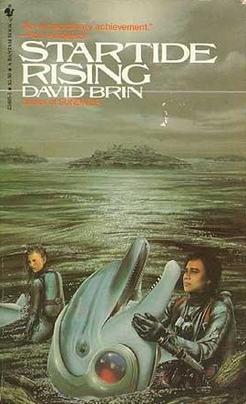
While rereading David Brin's Startide Rising as part of an SF inspiration binge, I realized that Brin's central metaphor of Uplift is both a knowing critique of imperialism within SF (Earthclan emerges into interstellar space not as masters of all they survey but as primitives confronted by imperial authority) and an entry in SF's ongoing infatuation with the cyclical historiographies of Oswald Spengler and Arnold J. Toynbee. The Old Weird writers so central to twentieth-century pulp fantasy—Robert E. Howard, H. P. Lovecraft, and Clark Ashton Smith—were operating at the same time as Doc Smith and the early SF pulp writers—and clearly the fantasists were drinking the same Spenglerian Kool-Aid as the scientifictionists. (Toynbee's 1950s provenance puts him after the original Old Weird moment.)
This is not a stunning, hitherto-unanticipated insight, but it is a useful one for me: the same tropes that inform barbaric fantasy inform imperial SF. Howard's Cimmerians are Brin's Earthlings (human, neo-chimp, and neo-dolphin alike). The SF characters fly their ships through the same ruined, belated landscape as their sword-slinging cousins, and the mandarinates of Brin's Galactic Institutions are perfectly akin to the decadent Hyborian civilizations of Conan's day.
All this is a fancy way of saying that running SWN—a game indebted in equal parts to the S&S-drenched rules sets of early D&D and the imperial SF of Traveller—fits in perfectly with the primary focus of this blog!
I'll have more to say about SWN in a later post, but I wanted to concentrate for now on the thematic link between sword-and-sorcery fiction and science fiction: the connection that lets me justify talking about an SF RPG on a barbarian-themed blog. (Well, in addition to the fact that I can talk about whatever I want on my blog.)
While rereading David Brin's Startide Rising as part of an SF inspiration binge, I realized that Brin's central metaphor of Uplift is both a knowing critique of imperialism within SF (Earthclan emerges into interstellar space not as masters of all they survey but as primitives confronted by imperial authority) and an entry in SF's ongoing infatuation with the cyclical historiographies of Oswald Spengler and Arnold J. Toynbee. The Old Weird writers so central to twentieth-century pulp fantasy—Robert E. Howard, H. P. Lovecraft, and Clark Ashton Smith—were operating at the same time as Doc Smith and the early SF pulp writers—and clearly the fantasists were drinking the same Spenglerian Kool-Aid as the scientifictionists. (Toynbee's 1950s provenance puts him after the original Old Weird moment.)
This is not a stunning, hitherto-unanticipated insight, but it is a useful one for me: the same tropes that inform barbaric fantasy inform imperial SF. Howard's Cimmerians are Brin's Earthlings (human, neo-chimp, and neo-dolphin alike). The SF characters fly their ships through the same ruined, belated landscape as their sword-slinging cousins, and the mandarinates of Brin's Galactic Institutions are perfectly akin to the decadent Hyborian civilizations of Conan's day.
All this is a fancy way of saying that running SWN—a game indebted in equal parts to the S&S-drenched rules sets of early D&D and the imperial SF of Traveller—fits in perfectly with the primary focus of this blog!
Wednesday, May 25, 2011
The Seven Cities of Magic, Take Two
I've made a few changes since my last post on the Seven Cities, both in response to the comments I received and as a result of further personal reflection. At the macro level, I've decided to concentrate on the Seven Cities and their immediate neighborhood instead of outlining a larger, more global setting. Working on a smaller scale is conducive to actually playing sooner rather than later. To this end I'm thinking that a mountain range populated by barbarian tribes and foul beasts lies to the north of the Seven Cities while a vast desert separating the Cities from the Azure Empire lies to their south. This desert also contains savage tribes and hideous beasts, but well-guarded caravans can successfully cross it.
I'm pondering the wisdom of including a large forest populated by the devolved remnants of the precursor civilization to the current human population. One thought would be to go with the savage elf archetype (a kind of inverse Melnibonean). But I could be persuaded to go in a different direction here. One thing is for certain: I don't want to use any sort of Serpent Men. That archetype feels played out to me.
As for the Seven Cities themselves, six are now dedicated to a particular magical tradition while the seventh is a sort of treaty city dedicated to sorcerous education:
1. Achiroth - A thanatocracy devoted to necromancy and shadow magics.
2. Banashan - Home to the university.
3. Belrood - A gynocracy ruled by witches and alchemists.
4. Drimshy - A maritime republic specializing in water and wind magics.
5. Kherem-Kha - A theocracy dependent on summoned outsiders.
6. Meton - A landlocked republic specializing in earth and fire magics.
7. Viserne - A city of illusions and glamours.
Thoughts?
I'm pondering the wisdom of including a large forest populated by the devolved remnants of the precursor civilization to the current human population. One thought would be to go with the savage elf archetype (a kind of inverse Melnibonean). But I could be persuaded to go in a different direction here. One thing is for certain: I don't want to use any sort of Serpent Men. That archetype feels played out to me.
As for the Seven Cities themselves, six are now dedicated to a particular magical tradition while the seventh is a sort of treaty city dedicated to sorcerous education:
1. Achiroth - A thanatocracy devoted to necromancy and shadow magics.
2. Banashan - Home to the university.
3. Belrood - A gynocracy ruled by witches and alchemists.
4. Drimshy - A maritime republic specializing in water and wind magics.
5. Kherem-Kha - A theocracy dependent on summoned outsiders.
6. Meton - A landlocked republic specializing in earth and fire magics.
7. Viserne - A city of illusions and glamours.
Thoughts?
Tuesday, May 10, 2011
The Upcoming Conan Movie
Not so sure about the recent full trailer--although it's a vast improvement over the green mists of the teaser--but I do like the new poster for the film. It's reminiscent of Frazetta's "Conan the Destroyer" without being a slavish reproduction:
"Born on the battlefield," indeed.
Monday, April 25, 2011
Founding the Seven Cities of Magic
I realize it's been some time since my last post to the blog. Rather than start with some sort of placeholder post signifying my return, I have decided to pick right back up with the sword-and-sorcery setting construction thread I had started back in 2010.
Jaws of the Six Serpents is the game for which I'm now constructing the setting. The element I want to work on at the moment is the collection of "Grimy City States" I was planning on calling the Seven Cities of Magic.
Each of the Cities of Magic is governed by a single sorcerer (or a cabal of sorcerers). I would like for each city to reflect the magical specialty of its ruler (or rulers). The question is how to realize that specificity in Jaws. The rules for Alchemy*, Charmcraft*, and Sorcery* take me in the right direction, but I'm thinking that I may need to follow the suggestion on p. 114 to divide Sorcery* in the setting into smaller, theme-specific categories of magic. Thoughts?
There's also the possibility of adapting the Urge system to fit my setting. I would probably not keep the idea of the Six Serpents, but there does seem some potential value in linking each of the Cities to a specific element (and a corresponding subset of magic). I just worry here about needless symmetry: might it not be better to separate the idea of Urges/mana entirely from geopolitics?
Here are the names I have down for the Seven Cities as well as any ideas I have about their magical tradition:
1. Achiroth, City of Shrouds - Necromancy and Shadow Magic.
2. Belrood, City of Witches - No particular thematic emphasis, but a clear political one that takes the shape of a matriarchal government.
3. Kherem-Kha - No ideas at present.
4. Enkal, City of Spirits - Unlike the other six Cities, Enkal is actually a temporary city formed by the annual gathering of the nomadic clans wandering the plains. Spirit Magic would be the theme here, and it's possible that I might give the Enkali the ability to serve as Intercessors (i.e., channels for the Ancestors in the world of today).
5. Honsulath - No ideas at present.
6. Meton, City of Gears - Here I was initially thinking of the Barbarians of Lemuria idea of Alchemy as the recovery of the lost magics of the Ancients. Alchemy* in Jaws is less mechanically and scientifically inclined, though, so I'm not sure how to realize Meton.
7. Regest - No ideas at present.
Jaws of the Six Serpents is the game for which I'm now constructing the setting. The element I want to work on at the moment is the collection of "Grimy City States" I was planning on calling the Seven Cities of Magic.
Each of the Cities of Magic is governed by a single sorcerer (or a cabal of sorcerers). I would like for each city to reflect the magical specialty of its ruler (or rulers). The question is how to realize that specificity in Jaws. The rules for Alchemy*, Charmcraft*, and Sorcery* take me in the right direction, but I'm thinking that I may need to follow the suggestion on p. 114 to divide Sorcery* in the setting into smaller, theme-specific categories of magic. Thoughts?
There's also the possibility of adapting the Urge system to fit my setting. I would probably not keep the idea of the Six Serpents, but there does seem some potential value in linking each of the Cities to a specific element (and a corresponding subset of magic). I just worry here about needless symmetry: might it not be better to separate the idea of Urges/mana entirely from geopolitics?
Here are the names I have down for the Seven Cities as well as any ideas I have about their magical tradition:
1. Achiroth, City of Shrouds - Necromancy and Shadow Magic.
2. Belrood, City of Witches - No particular thematic emphasis, but a clear political one that takes the shape of a matriarchal government.
3. Kherem-Kha - No ideas at present.
4. Enkal, City of Spirits - Unlike the other six Cities, Enkal is actually a temporary city formed by the annual gathering of the nomadic clans wandering the plains. Spirit Magic would be the theme here, and it's possible that I might give the Enkali the ability to serve as Intercessors (i.e., channels for the Ancestors in the world of today).
5. Honsulath - No ideas at present.
6. Meton, City of Gears - Here I was initially thinking of the Barbarians of Lemuria idea of Alchemy as the recovery of the lost magics of the Ancients. Alchemy* in Jaws is less mechanically and scientifically inclined, though, so I'm not sure how to realize Meton.
7. Regest - No ideas at present.
Sunday, September 5, 2010
Conan Meets Jaws
This long weekend I've been enjoying my perusal of Jaws of the Six Serpents, an RPG published by Tim Gray's Silver Branch Games that offers a sword-and-sorcery take on Chad Underkoffler's PDQ (Prose Descriptive Qualities) ruleset. Indeed, I'm so pleased with what I'm reading that I'm thinking of giving up the Barbarians of Lemuria rules in favor of Jaws. As a test run of the character creation rules, I took my Barbarians write-up of "Tower of the Elephant" Conan and translated it into Jaws terms. Game stats and commentary behind the fold . . .
Sunday, August 15, 2010
Shadow, Sword, Spell, and . . . BABY?
James Malieszewski of Grognardia has coauthored a "humanistic, pulp fantasy" RPG with his Rogue Games partner Richard Iorio. The game's called Shadow, Sword, & Spell, and it looks like another good addition to the tradition of sword-and-sorcery RPGs. I don't have time to review it at present, though—something suddenly came up:
Once the baby is settled in at home, I'll post a SS&S test character.
Subscribe to:
Posts (Atom)